At FandomSphere, fandom is not just audience size.
It’s behavior, loyalty, and long-term connection.
Every fan is different.
And every athlete has a unique commercial potential.
At FandomSphere, fandom is not a number — it is a structured and evolving profile.
We build a dynamic profile for every member and supporter.
Through campaigns, digital interaction and behavioral tracking, each profile becomes more precise over time.
FandomSphere helps sports organizations structure, understand, and activate fan data to improve performance, engagement, and long-term growth.
By structuring and activating fan profiles, clubs increase retention, improve campaign performance and generate stronger commercial positioning.
We build unified fan and member profiles by connecting data across ticketing, memberships, digital platforms, and communication channels.
Our structured data layer supports real operational and strategic decisions across sports, marketing, and commercial teams.
Most sports organizations track audience totals.
Fans interact with clubs across 5–7 different touchpoints on average
-Engagement levels vary significantly within the same fan base
By structuring this information, clubs gain a clear view of their community—not just its size.
Typical segmentation includes:
–How often they attend matches
–Whether they follow the club and its players on social media
–If they purchase merchandise
–How they engage with email campaigns
In our projects:
-30–35% of fan databases show inconsistent or declining engagement
-Early identification allows clubs to act before churn occurs
At FandomSphere, we don’t treat fan data as a list of attributes.
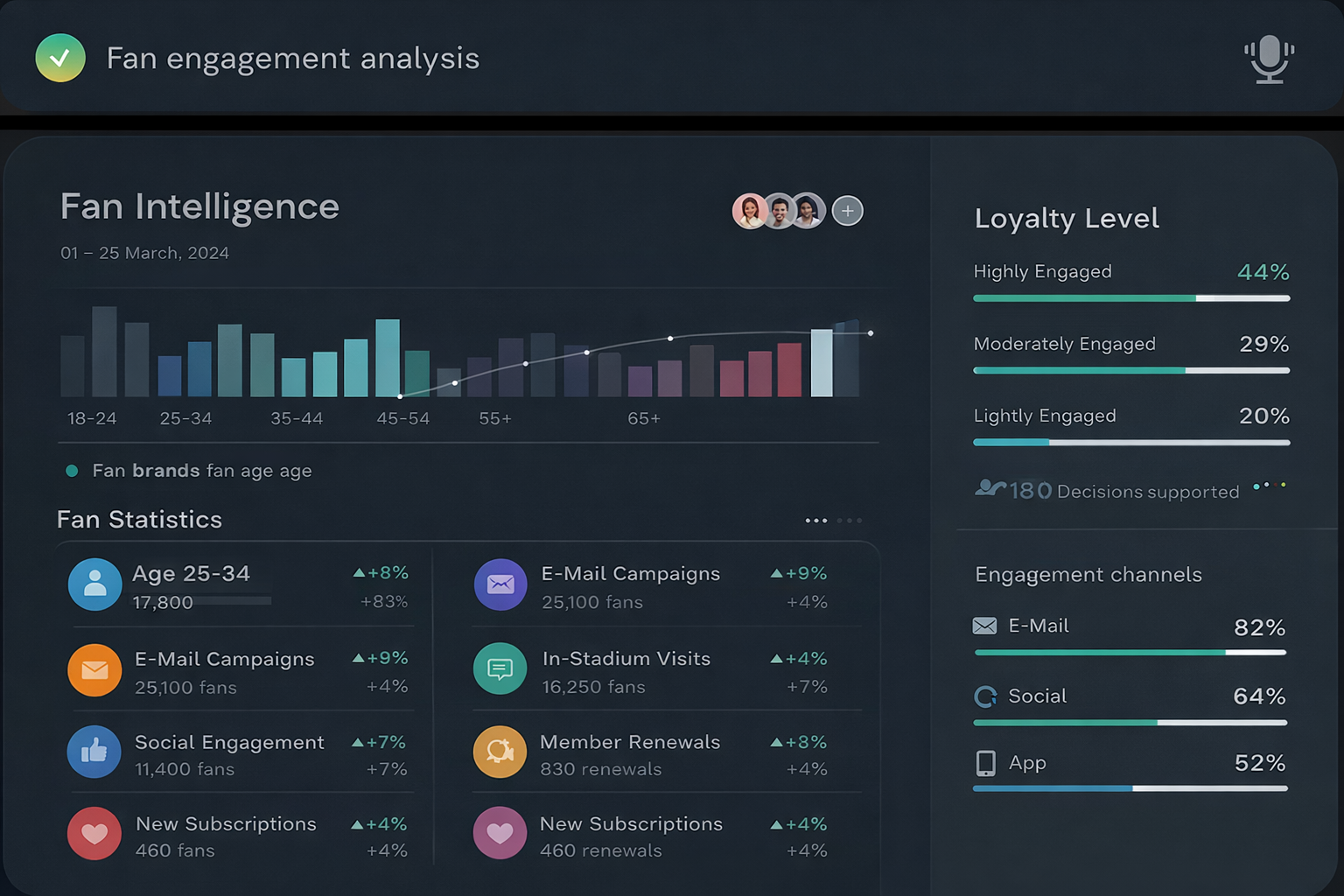
We structure, connect, and interpret every data point—age, gender, location, behavior, and engagement—to understand how each fan interacts with the club over time.
From static information to dynamic intelligence.
Each fan profile combines:
• Demographic data (age, gender, location)
• Behavioral data (attendance, engagement, interaction)
• Digital activity (channels, frequency, response)
• Historical evolution over time
This allows clubs to move from knowing who their fans are to understanding how they behave and how they change.